In any office or commercial environment, the surfaces people touch most often are also the ones that can spread dirt, grease and germs fastest. Door handles, lift buttons, desks, shared equipment and washroom fixtures all need regular attention because they are touched repeatedly throughout the day by staff, visitors and contractors. In Singapore workplaces, where offices often operate in compact layouts and shared spaces are heavily used, a practical cleaning plan should focus on the points of contact that matter most.
Why high-touch surfaces deserve priority in office cleaning
High-touch areas are not simply the surfaces that look dirty first. They are the places where contamination builds up most quickly because of constant use. Even in tidy workplaces, fingerprints, sweat, dust and residue from food or hand creams can accumulate on frequently touched points. If these surfaces are neglected, they can affect workplace hygiene, the appearance of the office and the overall experience of staff and visitors.
For office managers and facilities teams in Singapore, prioritising these surfaces also makes cleaning more efficient. Instead of treating every area equally, a structured commercial cleaning scope can focus on the touchpoints that have the greatest impact on hygiene and presentation. This is especially useful for regular office cleaning services and part time office cleaning arrangements where time on site must be used well.
The most important touchpoints in reception and shared entry areas
Reception areas create the first impression for clients, delivery personnel and visitors, so they should receive careful attention. Common high-touch surfaces include reception counters, visitor chairs, signing tablets, pens, brochures, door handles, glass doors and lift call buttons near the entrance. These areas tend to collect visible marks quickly, particularly in busy commercial premises with frequent footfall.
A good cleaning routine should also include light switches, intercoms, security access panels and card readers. These are often missed because they are small, but they are used many times each day. For offices that host external guests, keeping these points clean supports both presentation and basic hygiene standards.
Workstations, desks and shared office equipment
Desks and workstations are among the most commonly touched surfaces in any office. Employees rest their hands on them, move documents across them and eat or drink near them. Cleaning should therefore include desktop surfaces, drawer handles, monitor stands, desk phones, keyboards, mouse areas and personal storage handles where suitable. If the office uses hot-desking or shared desks, attention becomes even more important.
Shared equipment also needs consistent care, including printers, scanners, photocopiers and conference room devices. These items are used by multiple people and can become a collection point for fingerprints and dust. While some items require only dry or slightly damp wiping, a professional cleaner will know how to clean around sensitive equipment without causing damage.
Meeting rooms and collaboration spaces that often get overlooked
Meeting rooms may appear clean between appointments, but they are high-use areas with multiple touchpoints. Tables, chair backs, armrests, remote controls, conference phones, presentation buttons and whiteboard markers are touched repeatedly. In workplaces that host frequent client meetings or internal discussions, these spaces should be cleaned as part of the normal cleaning scope rather than treated as occasional deep-clean areas.
Shared collaboration zones, breakout corners and project rooms also deserve attention. Soft furnishings, coffee tables, charging stations and touchscreens can all collect oils and dust. A well-planned commercial cleaning schedule helps ensure these spaces remain presentable without disrupting work. For some offices, it makes sense to increase frequency before board meetings, client presentations or staff events.
Pantries, tea points and dining surfaces
Pantries are among the most hygiene-sensitive areas in a workplace because they combine food, drink and shared contact points. Countertops, microwave handles, fridge doors, kettle switches, cupboard handles, sink taps and bin lids should be cleaned regularly. Where staff prepare meals or snacks, spills and crumbs can also attract pests if they are left too long.
Tables, high stools and shared appliances in tea points should be included in the cleaning routine as well. In Singapore’s humid conditions, surfaces in pantry areas can develop odours or sticky residue more quickly if they are not wiped properly. A practical cleaning plan should balance appearance, hygiene and convenience, especially in offices with limited pantry space.
Toilets and washroom fixtures need consistent attention
Toilets are the most obvious hygiene area in any office, but the important touchpoints extend beyond the bowl and basin. Flush buttons, tap handles, soap dispensers, door handles, stall locks, grab bars and tissue dispensers are all high-contact surfaces that should be cleaned thoroughly. If these are left untouched, the washroom may look acceptable at a glance while still feeling unhygienic to users.
Regular cleaning of mirrors, counters, sinks and flooring also matters because washrooms are used frequently throughout the day. In commercial premises with higher occupancy, a more frequent part time cleaning services arrangement may be needed to keep the space usable and tidy. The right schedule depends on staff numbers, visitor traffic and the number of toilets in the premises.
Floors, upholstery and soft furnishings are part of touchpoint care too
Although floors are not “touched” in the same way as handles or desks, they are still part of the surfaces that affect cleanliness perception. Entry mats, lift lobbies, carpets and hard floors collect dust, debris and foot traffic residue that can be transferred to other areas. Routine sweeping, vacuuming and mopping help reduce that spread and support a cleaner working environment.
Upholstery also deserves more attention than many workplaces give it. Office chairs, sofa seating, fabric benches and lobby armchairs absorb oils, dust and spills over time. Office chair cleaning and office sofa cleaning can improve freshness and presentation, especially in reception areas and meeting spaces. For upholstered items, a planned approach is better than waiting until stains become obvious.
How professional cleaning differs from basic DIY upkeep
DIY wiping can help between scheduled cleans, but it usually focuses on what is visible rather than what is most important. Staff may tidy their own desks, but they often do not have the time, tools or cleaning products needed to maintain shared areas properly. As a result, high-touch points can be missed even in offices that look orderly.
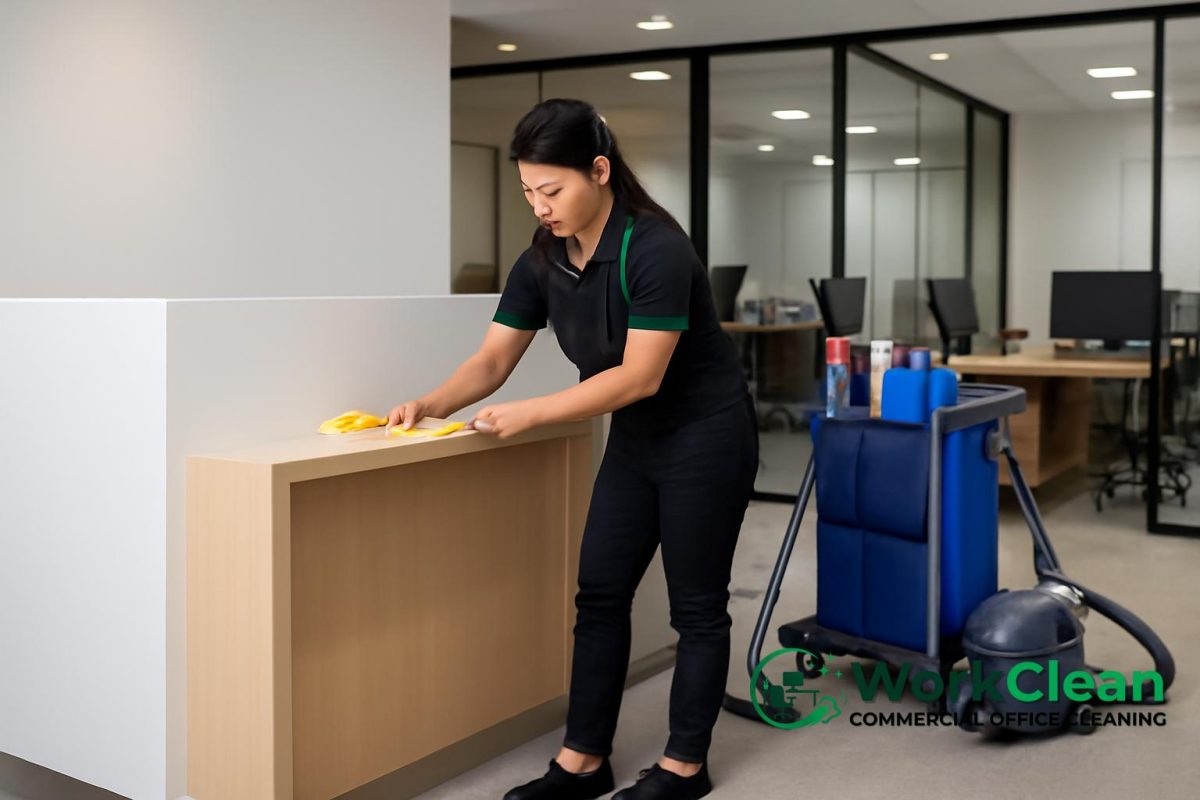
Professional office cleaning services are better suited to structured touchpoint cleaning because cleaners can follow a checklist, use appropriate materials and work to a defined standard. Depending on the premises, this may include microfibre cloths, sanitising solutions, vacuum equipment, floor machines and upholstery tools. The aim is not just to make the office look presentable, but to keep the environment consistently usable and hygienic.
Choosing the right cleaning frequency and service scope
The right frequency depends on how the workplace is used. A small office with limited visitors may manage with daily basic cleaning plus periodic deep cleaning, while a busy co-working space, customer-facing reception or larger commercial office may need more frequent attention. The most practical plan is one that matches occupancy, traffic and the types of touchpoints in the space.
When comparing providers, look at whether the cleaning scope is customised rather than fixed in a one-size-fits-all format. A sensible office cleaning company should be able to adjust the schedule for workstations, meeting rooms, pantries, toilets, shared spaces and floors. Cost is usually influenced by premises size, frequency, time of service, special tasks such as upholstery cleaning and the overall complexity of the site.
- Higher frequency suits busy offices, reception areas and shared facilities.
- Lower frequency may suit smaller teams with lighter footfall.
- Extra scope may be needed for fabric care, pantry hygiene or washroom upkeep.
If you would like a transparent quotation and a suitable cleaning scope, frequency and schedule for your office or commercial premises, you can WhatsApp WorkClean Commercial Office Cleaning Singapore here: message us on WhatsApp.
Common mistakes that reduce hygiene and cleaning value
One common mistake is focusing only on visible dirt while ignoring the objects people handle all day. Another is using the same method for every surface, which can lead to streaks, damage or incomplete cleaning. Workplaces also sometimes under-clean shared points such as fridge handles, switch plates and chair arms because they are not as obvious as desks or toilets.
Another issue is relying on irregular cleaning rather than a planned routine. In office and commercial cleaning, consistency matters more than occasional intensive effort. A good maintenance standard should combine daily care for high-touch areas with deeper periodic cleaning for upholstery, flooring and less accessible surfaces.
Conclusion
High-touch surfaces are the parts of an office or commercial premises that influence hygiene, comfort and appearance the most. By prioritising reception areas, workstations, meeting rooms, pantries, toilets, shared equipment and upholstered furnishings, businesses in Singapore can create a cleaner and more professional environment for staff and visitors. The most effective approach is usually a practical cleaning plan that matches how the space is used, rather than a generic checklist applied everywhere.
Choose WorkClean Commercial Office Cleaning Singapore
WorkClean Commercial Office Cleaning Singapore supports workplaces across Singapore with dependable and flexible office and commercial cleaning services. Our office cleaning arrangements include regular office cleaning, part-time office cleaning, part-time cleaning services and customised schedules for clients who require support with office upkeep without managing an in-house cleaning team. As an office cleaning company, we focus on key workplace areas such as workstations, meeting rooms, reception areas, pantries, toilets and common spaces. Whether you need a part-time office cleaner or a part-time cleaning company, we can recommend a suitable arrangement based on your premises, preferred timing and cleaning scope.
For broader commercial requirements, we also provide commercial cleaning services for different types of commercial premises. As a commercial cleaning company, we offer commercial office cleaning services together with general upkeep, upholstery cleaning, office chair cleaning and sofa cleaning where suitable.
Clients can read our blog for workplace cleaning insights, review our completed projects or check our pricing for available cleaning options. Contact WorkClean Commercial Office Cleaning Singapore on WhatsApp at +65 8241 0032 for assistance or to request a quotation.
Frequently Asked Questions
Which high-touch surfaces should be cleaned daily in an office?
Daily cleaning should usually cover door handles, reception counters, desks, shared equipment, pantry counters, tap handles, toilet fixtures and lift buttons. In busier workplaces, some of these points may need attention more than once a day.
Is part time office cleaning enough for a small workplace?
It can be, depending on staff numbers, visitor traffic and how the office is used. Small offices with lighter activity may only need part time support for routine upkeep, while busier premises may need a more frequent arrangement.
Do office chairs and sofas really need professional cleaning?
Yes, especially in reception areas, meeting rooms and shared seating zones. Upholstery collects dust, stains and odours over time, and professional cleaning can help maintain a fresher appearance and improve overall workplace presentation.