Your first commercial cleaning appointment should feel straightforward, organised and tailored to the way your workplace actually operates. Whether you manage an office, co-working space, showroom or another commercial premises in Singapore, understanding what typically happens at the first visit helps you prepare staff, protect sensitive areas and set the right expectations for ongoing cleanliness.
What usually happens before the cleaners arrive
Most professional office cleaning arrangements begin with a short discussion about your premises, cleaning priorities and operating hours. This is where the cleaning scope is clarified: which areas need attention, how often they should be cleaned, and whether the arrangement is for regular office cleaning, part time office cleaning or a broader commercial cleaning schedule. The cleaner or office cleaning company may also ask about floor surfaces, pantry usage, toilet counts, meeting room frequency and any delicate items that need special care.
For Singapore workplaces, this pre-appointment step is important because every office has different patterns of use. A startup with a compact workspace may only need light daily upkeep, while a busy commercial tenant with visitors, pantry traffic and shared facilities may need a more detailed routine. Clear instructions at the start help avoid misunderstandings later and make the appointment more efficient.
How your office or commercial space is typically assessed
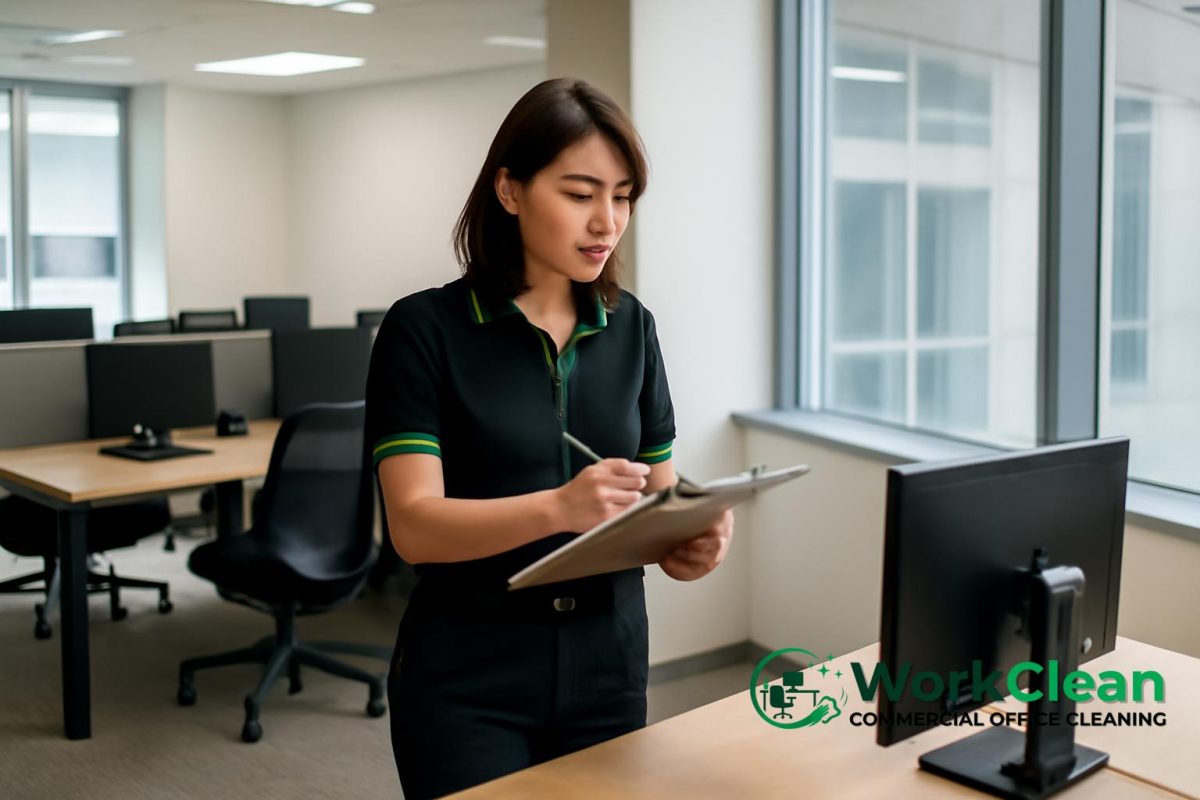
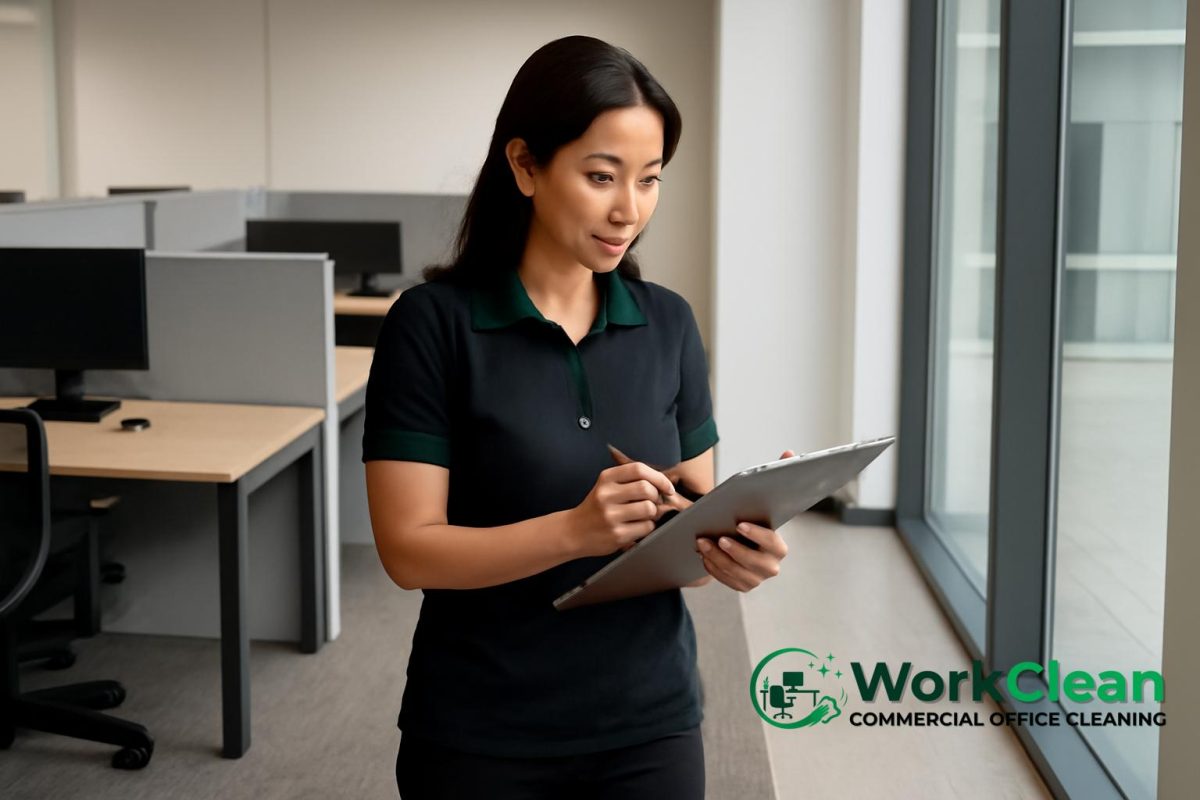
During the first visit, the cleaner will usually look at the layout and condition of the premises before starting work. They may note the number of workstations, reception areas, meeting rooms, pantries, toilets, shared spaces and circulation routes. If your premises include upholstered chairs, sofas or other soft furnishings, these may also be identified for occasional upholstery cleaning or office chair cleaning as part of a wider maintenance plan.
This assessment is not just about size. It is also about risk and use. For example, high-touch surfaces, pantry counters and toilet touchpoints need different attention from low-traffic areas. A good first appointment should therefore feel practical and methodical, not rushed. It is also a chance for you to flag company-specific preferences such as preferred cleaning products, restricted rooms, security procedures or times when certain areas should not be disturbed.
What tasks are commonly covered on the first cleaning visit
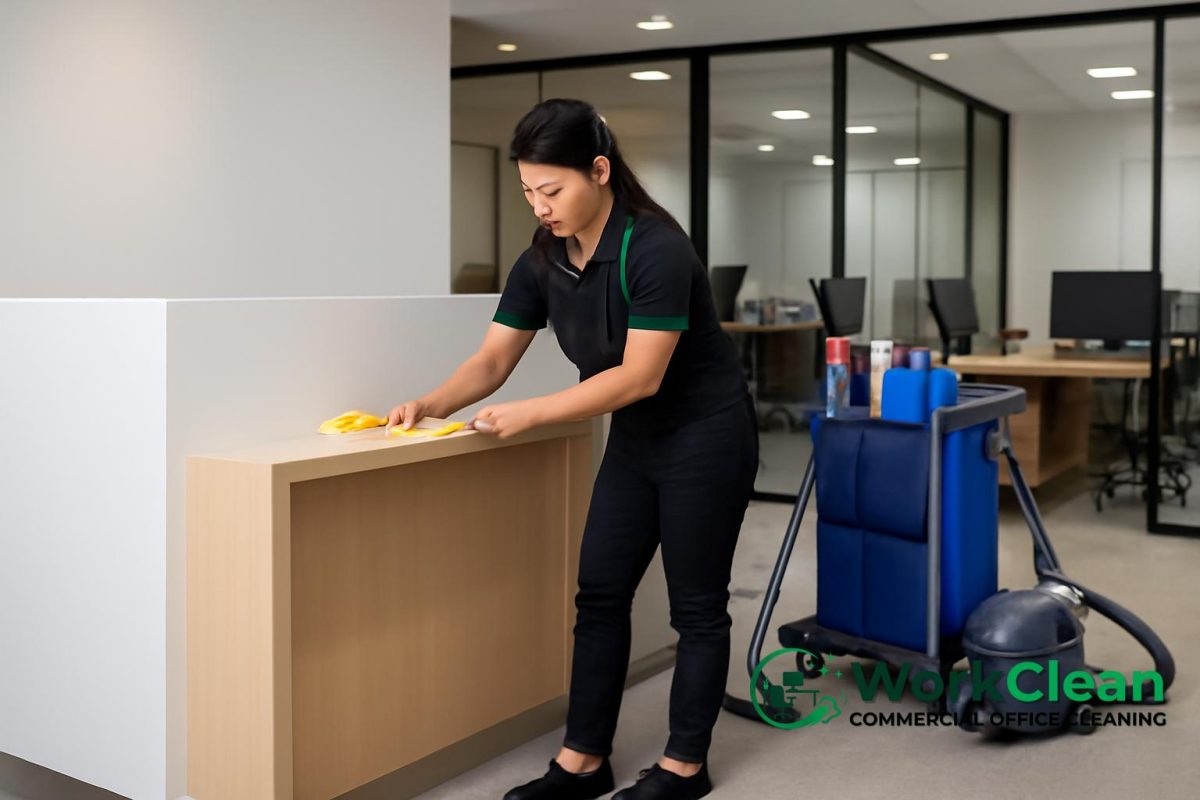
At the first appointment, the focus is often on bringing the workplace up to a sensible maintenance standard rather than attempting an extreme deep clean in one session. Typical tasks may include wiping desks and shared surfaces, emptying bins, vacuuming or mopping floors, cleaning toilets, tidying pantries, dusting reception counters and refreshing meeting rooms. Depending on the arrangement, the cleaner may also handle glass touchpoints, common fixtures and other routine hygiene tasks that support a professional environment.
In some offices, the first visit may also include more visible restorative work such as removing accumulated dust from skirting boards, cleaning chair surfaces, or attending to sofa upholstery that has collected dirt over time. This is especially useful before shifting into a regular office cleaning schedule. The exact scope should always reflect what was agreed with the cleaning provider, so that expectations are realistic and the first service is aligned with the condition of the premises.
What the cleaners need from your side
To keep the appointment smooth, your team should prepare the workplace in simple ways. Clear desks where possible, secure sensitive paperwork, store personal items and ensure access to toilets, pantries and other priority areas. If there are alarm systems, access cards, lift restrictions or visitor procedures, these should be shared in advance so the cleaning team can work without delays.
It is also helpful to decide who will be the main point of contact on the day. This person can answer questions, confirm priorities and resolve small practical issues such as locked rooms or special requests. In part time cleaning services arrangements, this is particularly useful because cleaners may be working outside normal office hours and need concise instructions to complete the job efficiently.
How cleaning frequency and schedule affect the appointment
The first appointment is often the starting point for a continuing schedule, so it helps to think beyond that single visit. Some offices need daily upkeep, while others are better served by a few weekly visits combined with targeted tasks for toilets, meeting rooms and shared spaces. A suitable commercial cleaning company should be able to propose a frequency that fits both your usage level and your budget.
For many Singapore businesses, part time office cleaning offers flexibility when full-time housekeeping is unnecessary. The appointment may be arranged before opening hours, after closing or during quieter periods to reduce disruption. The right schedule should support hygiene, staff comfort and visitor experience without interfering with normal business operations.
What to expect from equipment, products and cleaning methods
Professional cleaners typically bring basic equipment such as mops, cloths, vacuum cleaners and appropriate cleaning solutions. Depending on the task, they may use different methods for floors, desks, toilets, pantry areas and upholstery. In a commercial setting, the aim is usually to clean efficiently while protecting surfaces and maintaining a consistent standard across the premises.
This is where professional cleaning differs from DIY cleaning. Internal staff can handle small messes and day-to-day tidiness, but commercial cleaning is usually more structured and suitable for broader maintenance needs. It can also be easier to keep standards steady when the same scope is carried out on a planned basis rather than only when the office becomes visibly dirty. Good equipment and proper methods matter, especially for shared spaces, office chairs, sofas and other frequently used items.
Common mistakes businesses make during the first appointment
One of the most common mistakes is assuming the cleaner will automatically know which areas matter most. If your reception space must always look presentable, or if pantry hygiene is a priority because staff use the area frequently, say so clearly. Another mistake is setting an unrealistic scope for the first visit, especially when the premises have not been cleaned properly for some time.
Businesses also sometimes overlook practical details such as access times, storage for equipment or how to handle confidential spaces. Others compare providers only on price and ignore whether the proposed service actually fits the workplace. When reviewing office cleaning company options, look at how clearly they explain the work, how well they understand commercial cleaning requirements and whether their proposed schedule is realistic for your site.
How to judge whether the arrangement is suitable for your workplace
A suitable first appointment should leave you with a clearer sense of what is being maintained, how often it should be done and what level of attention each area needs. Your workplace should feel fresher, more orderly and more comfortable for staff and visitors. You should also have a better understanding of which tasks are regular maintenance and which may need occasional add-ons such as upholstery cleaning or deeper floor care.
Cost is usually influenced by factors such as office size, cleaning frequency, number of toilets, pantry usage, flooring type and whether special areas need extra attention. The most useful quotation is one that explains the scope in plain terms rather than hiding behind vague promises. In practical terms, a good cleaning provider helps you maintain hygiene, support productivity and keep the premises presentable without unnecessary complexity.
If you would like a transparent quotation and a suitable office or commercial cleaning scope, frequency and schedule for your workplace, you may WhatsApp WorkClean Commercial Office Cleaning Singapore here: send a message on WhatsApp.
Conclusion
Your first commercial cleaning appointment should be a practical starting point, not a guessing game. When the scope, access arrangements, frequency and priorities are clearly agreed, the service is easier to manage and better suited to the real needs of your office or commercial premises. For Singapore businesses, that often means balancing daily hygiene, shared-space upkeep and flexible part time arrangements in a way that supports both staff well-being and workplace presentation.
Choose WorkClean Commercial Office Cleaning Singapore
WorkClean Commercial Office Cleaning Singapore supports workplaces across Singapore with dependable and flexible office and commercial cleaning services. Our office cleaning arrangements include regular office cleaning, part-time office cleaning, part-time cleaning services and customised schedules for clients who require support with office upkeep without managing an in-house cleaning team. As an office cleaning company, we focus on key workplace areas such as workstations, meeting rooms, reception areas, pantries, toilets and common spaces. Whether you need a part-time office cleaner or a part-time cleaning company, we can recommend a suitable arrangement based on your premises, preferred timing and cleaning scope.
For broader commercial requirements, we also provide commercial cleaning services for different types of commercial premises. As a commercial cleaning company, we offer commercial office cleaning services together with general upkeep, upholstery cleaning, office chair cleaning and sofa cleaning where suitable.
Clients can read our blog for workplace cleaning insights, review our completed projects or check our pricing for available cleaning options. Contact WorkClean Commercial Office Cleaning Singapore on WhatsApp at +65 8241 0032 for assistance or to request a quotation.
Frequently Asked Questions
How long does the first commercial cleaning appointment usually take?
It depends on the size of the premises, the cleaning scope and how much groundwork is needed. A small office with routine upkeep may be completed relatively quickly, while larger workplaces or spaces needing more detailed attention will take longer. The time required is usually linked to the number of rooms, toilets, shared areas and any add-on tasks such as upholstery cleaning.
Should we prepare our desks before the cleaners arrive?
Yes, it is helpful to clear personal items, secure confidential documents and keep walkways accessible. This allows the cleaners to work more efficiently and reduces the risk of missing areas around workstations. If certain desks should not be touched, make that clear in advance.
Is part time office cleaning enough for a small Singapore office?
For many small offices, part time office cleaning is a practical option because it provides regular maintenance without requiring a full-time cleaner. The right frequency depends on how busy the workplace is, whether visitors are received often and how heavily the pantry and toilets are used.