For offices and other commercial premises in Singapore, cleaning works best when it is planned by frequency rather than handled only when something looks dirty. Daily routines keep shared areas hygienic and presentable, weekly tasks prevent build-up in high-use spaces, and periodic cleaning takes care of the items and surfaces that are easy to overlook but difficult to maintain once neglected. A clear schedule also helps business owners, office managers and facilities teams set expectations for in-house staff or a professional office cleaning company.
Why cleaning frequency matters in Singapore workplaces
Singapore offices often operate in compact, shared environments where many people use the same workstations, pantry, meeting room and toilet facilities throughout the day. In this setting, a regular cleaning plan supports workplace hygiene, reduces unpleasant odours and helps maintain a professional impression for visitors, clients and staff. It also makes it easier to manage commercial cleaning requirements without waiting for problems to escalate.
From a practical point of view, frequency matters because not every task needs the same level of attention. High-touch surfaces and toilets may need attention every day, while upholstery cleaning or deep floor maintenance can be done less often. When tasks are grouped properly, cleaning teams can work more efficiently and businesses can better match the scope to their budget and operating hours.
What should be cleaned daily
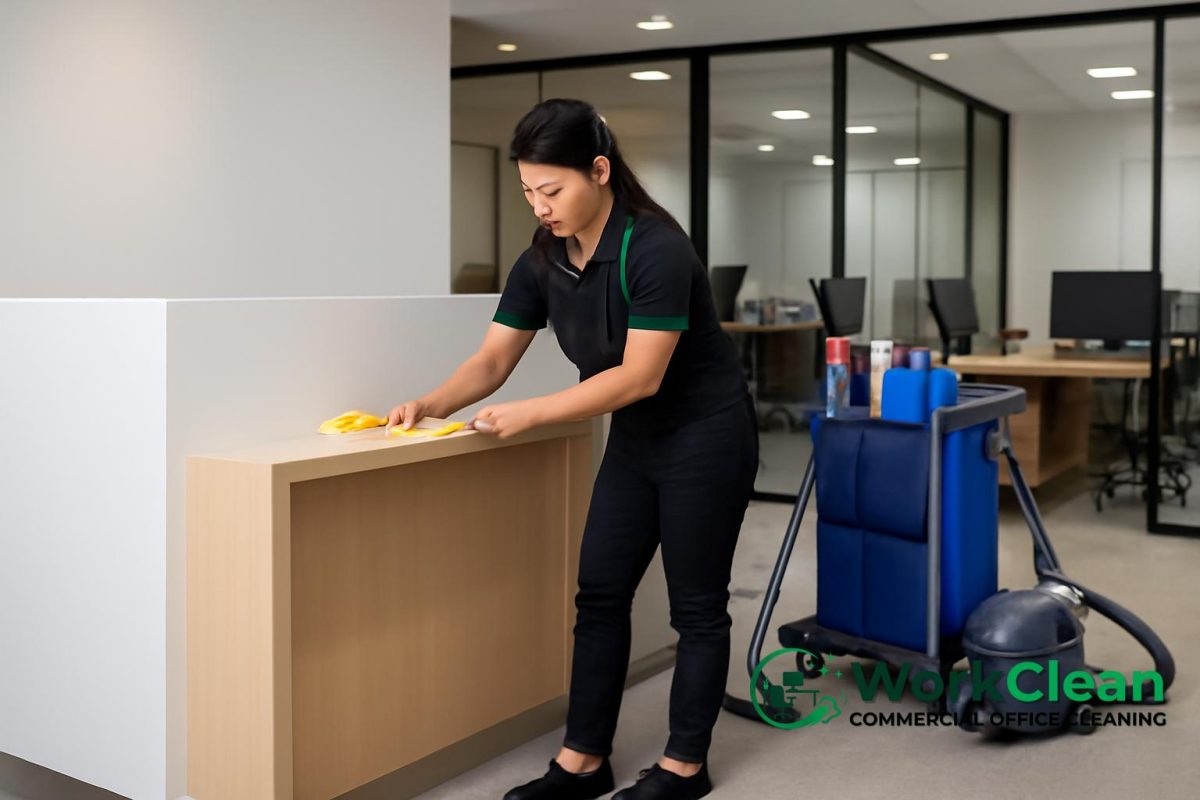
Daily cleaning focuses on the areas that affect hygiene, appearance and day-to-day comfort. In most offices, this includes workstations, reception counters, pantry surfaces, meeting room tables, washroom fixtures and shared touchpoints such as door handles, switches and lift lobby touch areas where applicable. These spaces are used constantly, so regular wiping and sanitising help reduce the spread of grime and keep the office presentable.
A typical daily scope may include:
- Emptying bins and replacing liners
- Wiping desks, tables, counters and high-touch points
- Sweeping, vacuuming or mopping floors in common areas
- Cleaning and restocking toilets
- Cleaning pantry sinks, surfaces and appliance exteriors
- Removing visible spills, crumbs and dust
Daily cleaning is especially important in reception areas and client-facing spaces because first impressions are formed quickly. It also supports staff comfort, particularly in Singapore’s humid conditions where dust, moisture and food residues can build up faster than expected.
Which tasks are best handled weekly
Weekly cleaning covers areas that do not usually require daily attention but should not be left for too long. This often includes more detailed dusting of ledges, skirting boards and furniture edges, as well as cleaning around the base of office chairs, under desks and behind movable items where practical. Shared spaces such as meeting rooms and breakout areas also benefit from a more thorough weekly approach.
Common weekly tasks include general floor upkeep beyond the daily sweep or mop, cleaning glass partitions at reachable levels, refreshing pantry appliances, sanitising less frequently touched surfaces and checking for marks on walls, doors and furniture. In some workplaces, weekly work may also include light office chair cleaning and spot-cleaning office sofa and upholstery surfaces.
Weekly attention is useful because it bridges the gap between basic daily housekeeping and more specialised periodic services. It helps prevent dust and stains from becoming embedded, and it keeps the overall office environment looking orderly without requiring disruptive deep-cleaning visits too often.
What should be scheduled periodically
Periodic cleaning refers to tasks that are needed less often but are still important for the long-term condition of the workplace. This may be monthly, quarterly or at another suitable interval depending on footfall, layout and the type of business. For many Singapore offices, periodic cleaning includes deeper treatment of floors, detailed upholstery cleaning, office chair cleaning, office sofa cleaning, interior glass cleaning and cleaning of hard-to-reach areas.
Examples of periodic tasks include:
- Deep cleaning of carpets or fabric flooring
- Machine scrubbing and polishing of hard floors
- Thorough cleaning of upholstery, sofas and fabric chairs
- Cleaning behind cabinets, appliances and fixed furniture
- Descaling or deeper toilet cleaning where required
- Internal window and partition cleaning
These tasks are often better suited to a professional commercial cleaning company because they may require specialised cleaning equipment, suitable products and more time than a routine daily visit allows. Periodic cleaning also supports maintenance standards by extending the lifespan of floors, fabrics and furniture.
How to decide between in-house cleaning, part time help and a cleaning company
The right arrangement depends on the size of the office, the number of staff, the building layout and how busy the premises are each day. Smaller offices or startups may find part time cleaning services suitable for daily upkeep and simple weekly work, especially if the team mainly needs a reliable cleaner for common areas, pantry support and toilets. Larger offices or multi-use commercial premises may need a more structured commercial cleaning service with a broader schedule.
When comparing options, look at the actual cleaning scope rather than only the number of visits. A suitable office cleaning company should be able to align cleaning tasks with your hours of operation, visitor traffic and specific areas such as reception, meeting rooms, workstations, pantries and toilets. It is also sensible to ask whether the provider can adjust the schedule for events, peak periods or tenancy changes.
For many businesses, a hybrid approach works well: daily part time office cleaning for essential upkeep, plus periodic deep cleaning for floors, upholstery and other specialist areas. This keeps the office presentable while maintaining a practical balance between convenience and cost.
Common cleaning mistakes that create avoidable problems
One of the most common mistakes is treating every task as if it needs to happen daily. This can waste time and money, while still missing the areas that genuinely need regular attention. Another mistake is focusing only on visible surfaces and ignoring under-desk spaces, shared touchpoints and fabric items that hold dust and odours.
Businesses also sometimes overlook the importance of suitable cleaning equipment and the correct method for each surface. For example, aggressive chemicals may damage upholstery, while inadequate floor care can leave residue or dull the finish. In shared offices, another issue is leaving pantry and toilet duties until the end of the day, which can quickly affect hygiene and staff experience during working hours.
Clear task allocation helps avoid these issues. A well-planned cleaning schedule should separate daily maintenance, weekly detail work and periodic deep cleaning so that each area gets the right level of care at the right time.
What affects office cleaning cost in Singapore
Commercial cleaning costs are usually influenced by the size of the premises, the frequency of service, the cleaning scope and the level of detail required. An office with multiple toilets, a large pantry, fabric seating and high visitor traffic will usually need more work than a small, low-traffic workspace. Timing also matters, as after-hours or special scheduling requirements can affect the overall arrangement.
Equipment and task complexity can also affect cost. Simple daily vacuuming and wiping are different from periodic deep cleaning, machine scrubbing, or detailed office chair cleaning and sofa cleaning. If your workplace needs customised cleaning schedules, it is helpful to identify which tasks must happen every day, which can be done weekly and which can be handled periodically. This makes quotations easier to compare fairly.
Transparent pricing is usually clearer when the service provider understands the actual usage of the premises, rather than offering a generic package that may not fit your office. The best value is often found in a scope that matches your real cleaning priorities.
How to choose a suitable cleaning provider
A good provider should understand how commercial premises in Singapore function and be able to recommend a practical schedule. Ask how they would divide daily, weekly and periodic tasks, and whether they can clean the specific areas that matter most to your workplace, such as workstations, meeting rooms, reception areas, pantries, toilets and shared spaces. Clear scope matters more than broad promises.
It is also useful to ask about the equipment and methods used for different surfaces, especially for floors, upholstery and office furniture. A reliable office cleaning company should be able to explain how it handles routine upkeep as well as deeper tasks without disrupting operations. Communication is important too, because a responsive provider can adjust to tenancy changes, events or shifts in office use.
Ultimately, the best choice is a commercial cleaning arrangement that supports hygiene, staff comfort and a professional image while remaining practical for your business operations.
If you would like a transparent quotation and a suitable office or commercial cleaning scope, frequency and schedule, WhatsApp WorkClean Commercial Office Cleaning Singapore to discuss your workplace needs.
Conclusion
A sensible cleaning plan separates daily essentials from weekly maintenance and periodic deep cleaning. This approach keeps offices and commercial premises in Singapore hygienic, comfortable and presentable, while making better use of time and budget. By matching the frequency to each area’s use, businesses can maintain cleaner workspaces and support a more professional everyday environment.
Choose WorkClean Commercial Office Cleaning Singapore
WorkClean Commercial Office Cleaning Singapore supports workplaces across Singapore with dependable and flexible office and commercial cleaning services. Our office cleaning arrangements include regular office cleaning, part-time office cleaning, part-time cleaning services and customised schedules for clients who require support with office upkeep without managing an in-house cleaning team. As an office cleaning company, we focus on key workplace areas such as workstations, meeting rooms, reception areas, pantries, toilets and common spaces. Whether you need a part-time office cleaner or a part-time cleaning company, we can recommend a suitable arrangement based on your premises, preferred timing and cleaning scope.
For broader commercial requirements, we also provide commercial cleaning services for different types of commercial premises. As a commercial cleaning company, we offer commercial office cleaning services together with general upkeep, upholstery cleaning, office chair cleaning and sofa cleaning where suitable.
Clients can read our blog for workplace cleaning insights, review our completed projects or check our pricing for available cleaning options. Contact WorkClean Commercial Office Cleaning Singapore on WhatsApp at +65 8241 0032 for assistance or to request a quotation.
Frequently Asked Questions
How often should office toilets be cleaned?
Office toilets should usually be cleaned daily, and in busier workplaces they may need more than one touchpoint throughout the day. Toilets are high-use areas, so regular attention helps maintain hygiene, odour control and a better experience for staff and visitors.
Do meeting rooms need daily cleaning if they are not used every day?
Even lightly used meeting rooms benefit from regular dusting, floor cleaning and table wiping. If the room is used only occasionally, weekly cleaning may be enough for basic upkeep, with deeper cleaning scheduled periodically depending on use and occupancy.
Is part time office cleaning suitable for small businesses?
Yes, part time office cleaning can be a practical option for small businesses, startups and co-working spaces that need dependable daily or weekly upkeep without a full-time arrangement. The key is to define the scope clearly so that the most important areas are cleaned at the right frequency.