In most Singapore offices, the right cleaning frequency depends on how people use the space, how many staff are on site, and which areas receive the most touch points throughout the day. Workstations, meeting rooms and pantries do not all need the same level of attention, and treating them as if they do can lead either to poor hygiene or unnecessary cost. A practical office cleaning schedule balances daily upkeep with deeper periodic cleaning, so the workplace stays presentable, productive and comfortable for staff and visitors.
Why cleaning frequency should match how each space is used
Commercial cleaning for offices is most effective when it follows real usage patterns rather than a one-size-fits-all checklist. A workstation used by one person may only need light daily cleaning and weekly detail work, while a shared meeting room may require more frequent touch-point cleaning because many people use it in a day. Pantries usually need the closest attention because they involve food preparation, spills and shared appliances.
In Singapore, workplaces also face practical factors such as humid weather, frequent use of air-conditioning, indoor dust build-up and the fast pace of business operations. These conditions make regular cleaning important not just for appearance, but for hygiene, odour control and the general upkeep of office equipment and furniture.
How often workstations should be cleaned
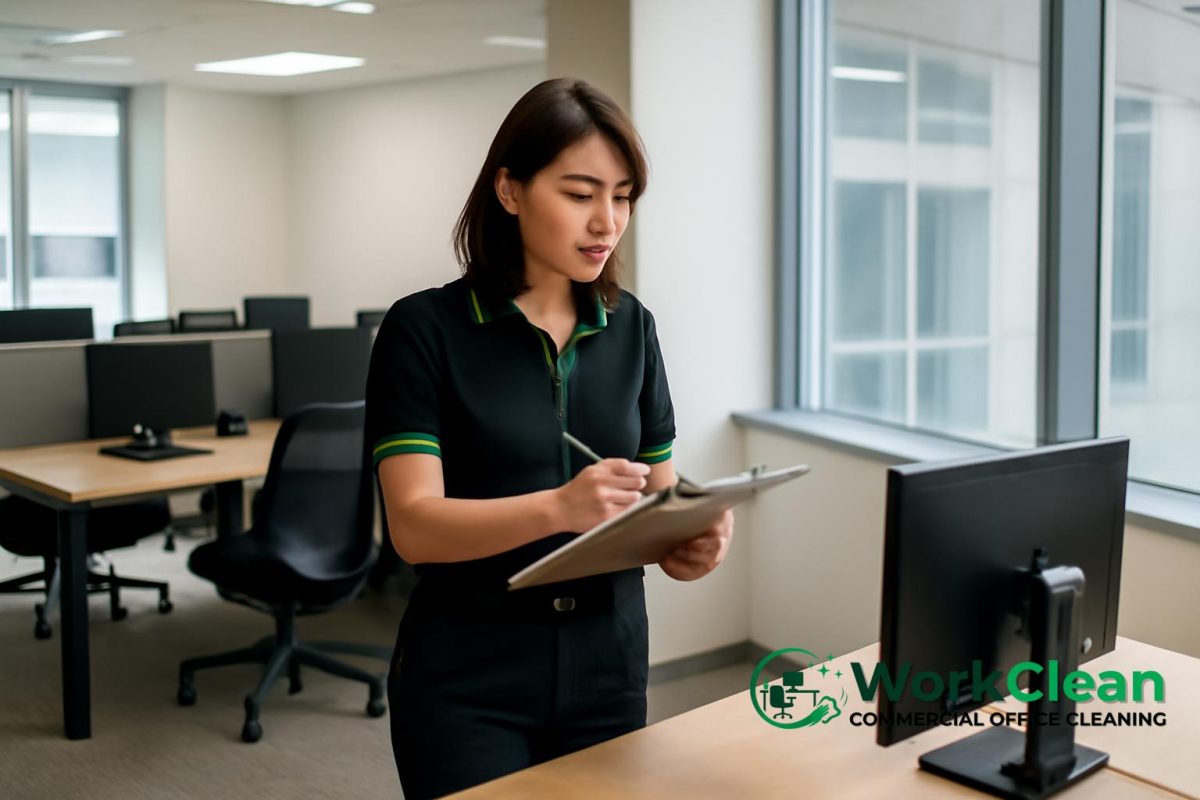
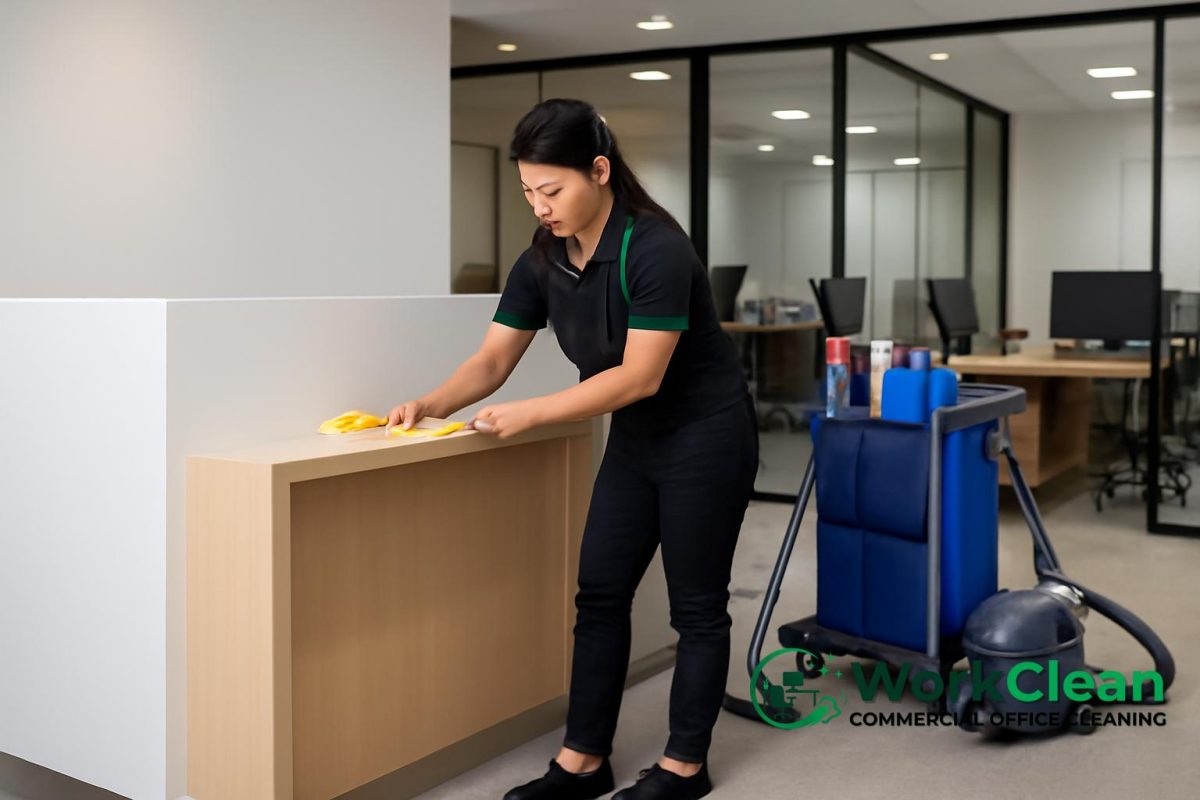
Workstations usually benefit from daily surface cleaning at minimum, especially in open-plan offices, co-working environments and commercial premises with shared desks. Daily cleaning should focus on dusting accessible surfaces, wiping down desks, sanitising commonly touched areas such as drawer handles and table edges, and keeping the work area tidy. This helps reduce dust build-up and keeps the workplace looking orderly for staff and visitors.
For more detailed care, a weekly or scheduled deep-clean approach can be used for areas that are not addressed during routine cleaning, such as behind monitors, under pedestals, cable routes, and the base of desk dividers. Where staff eat at their desks, or where hot-desking is common, the cleaning scope may need to be more frequent because crumbs, marks and shared contact points accumulate faster.
Workstations with upholstered office chairs may also need periodic office chair cleaning or upholstery cleaning, particularly where fabric holds odours, dust or stains. For many offices, this is best done as a planned maintenance task rather than waiting until the furniture looks visibly dirty.
Meeting rooms need more than occasional tidying
Meeting rooms often appear clean at a glance, but they are high-touch spaces that can quickly become untidy through repeated use. Tables, chair arms, remote controls, light switches, whiteboards, glass surfaces and conferencing equipment all collect fingerprints and dust. For that reason, meeting rooms should usually be included in daily cleaning, even if the room is not used every day.
During routine office cleaning, the scope should normally cover wiping surfaces, clearing debris, vacuuming or mopping the floor, and checking that chairs are arranged neatly. If a meeting room hosts client presentations, board meetings or interviews, presentation matters as much as hygiene. A clean room supports professionalism and gives visitors a better impression of the company.
For rooms used heavily throughout the week, a more detailed weekly service may also be appropriate. This can include glass cleaning, detail dusting of furniture edges, cleaning skirting areas and spot-treating upholstery or soft seating where needed. A good commercial cleaning company will adjust the frequency depending on the room’s traffic and the types of meetings held there.
Pantries usually require the highest cleaning priority
Pantries should be treated as one of the most hygiene-sensitive areas in any office or commercial premises. Because they involve food, drink, shared appliances and waste bins, they often need daily cleaning with extra attention to sinks, microwaves, countertops, fridge exteriors and bin areas. Spills left too long can attract pests, create odours and make the pantry unpleasant to use.
Where pantry use is heavy, a part time cleaning arrangement can help provide regular support without requiring a full-time arrangement for the whole workplace. This is especially useful in Singapore SMEs, startups and co-working spaces where pantry use spikes during lunch hours and afternoon breaks. Cleaning should ideally include wiping handles, counters, tables and splash-prone areas, plus topping up consumables where that falls within the agreed scope.
It is also wise to separate everyday tidying from periodic deep cleaning. Routine cleaning may keep the pantry usable, but deeper maintenance is needed for fridge interiors, cupboard edges, appliance surrounds and stubborn grease or residue. A proper cleaning schedule reduces the chance of hygiene issues building up unnoticed.
When daily cleaning is enough, and when deeper cleaning is needed
Some offices only need light daily office cleaning, while others require a more comprehensive commercial cleaning plan. A small office with limited footfall may manage well with regular dusting, vacuuming, bin emptying and pantry upkeep. A larger office, reception-heavy workplace or shared commercial space usually needs a broader scope that includes more touch points, toilets, shared tables and common areas.
As a general rule, the more people using the space, the more frequently high-touch and shared areas should be cleaned. Meeting rooms, pantries, toilets and reception areas often need daily attention. Workstations may need a mix of daily surface cleaning and scheduled detail cleaning. Floors, upholstery and office sofas usually benefit from planned maintenance rather than constant spot cleaning, unless the area has heavy use.
Common signs the cleaning schedule is too light include:
- Visible dust returning quickly on desks and shelves
- Finger marks on glass, doors and shared surfaces
- Odours from the pantry or bins
- Dirty chair arms, sofa cushions or fabric surfaces
- Frequent complaints about cleanliness from staff or visitors
DIY cleaning versus professional office cleaning
Some everyday upkeep can be managed internally, especially simple desk tidying or wiping up a small spill. However, DIY cleaning usually falls short when a workplace needs consistent hygiene across multiple spaces, special equipment or a dependable routine. Staff members are rarely trained or equipped to clean floors, chairs, pantries and shared areas to the same standard as a dedicated cleaning arrangement.
A professional office cleaning company or commercial cleaning company brings a structured cleaning scope, suitable materials and a repeatable process. This is particularly helpful for offices that need regular cleaning services, part time office cleaning or customised cleaning schedules. Professional support also helps maintain standards in reception areas, meeting rooms, toilets, shared zones and pantry spaces without relying on ad hoc effort from employees.
That said, professional cleaning works best when matched with good internal habits. Staff should be encouraged to clear desks, manage food waste properly and leave shared spaces ready for cleaning. When the workplace and cleaning provider both understand their roles, the result is better hygiene and less wasted time.
Choosing equipment, methods and maintenance standards
The right cleaning equipment makes a noticeable difference to results. Microfibre cloths, appropriate disinfectants, vacuum cleaners, floor-care tools and upholstery cleaning equipment all serve different purposes. Using the wrong product can leave streaks, damage finishes or simply move dirt around. For offices with mixed surfaces, a cleaning provider should be able to work across desks, laminate, glass, fabric, vinyl and hard floors without causing wear.
Maintenance standards should be practical and visible. Clean desks should be free of dust and residue. Meeting tables should be wiped and reset. Pantries should be free from food debris and sticky marks. Floors should be kept safe and tidy, with rubbish removed promptly. Office chairs and office sofas should be checked for crumbs, stains and dust build-up as part of periodic upkeep, not treated as an afterthought.
Where possible, ask for a clear scope that explains what is included daily, weekly and monthly. This helps avoid confusion over whether cleaning covers only the visible areas or also detail work such as skirting boards, chair bases, pantry appliances and shared touch points.
What affects office cleaning cost in Singapore
Cost usually depends on the size of the premises, frequency of service, cleaning scope, number of shared areas and whether the arrangement is part time or regular daily support. A simple office with a few workstations and a small pantry will usually cost less to clean than a larger commercial space with meeting rooms, reception, multiple toilets and extensive floor area.
Other cost factors include the level of detail required, the need for upholstery cleaning, the condition of the premises and whether after-hours cleaning is needed to fit business operations. It is often more cost-effective to agree a realistic schedule from the start than to add urgent tasks later when dirt has already built up.
When comparing providers, look beyond the headline price. A suitable service should explain the scope clearly, identify which areas are cleaned at what frequency, and offer a schedule that matches how your office actually operates.
If you would like a transparent quotation and a suitable office or commercial cleaning scope for your workstations, meeting rooms and pantry areas, WhatsApp WorkClean Commercial Office Cleaning Singapore here: message us on WhatsApp.
Conclusion
The best cleaning frequency for workstations, meeting rooms and pantries depends on use, traffic and hygiene risk. In most Singapore offices, workstations need daily surface cleaning with periodic detail work, meeting rooms benefit from regular high-touch cleaning, and pantries usually require the most frequent attention. A well-planned office cleaning schedule supports productivity, improves the visitor experience and keeps commercial premises presentable without overspending on unnecessary tasks.
Choose WorkClean Commercial Office Cleaning Singapore
WorkClean Commercial Office Cleaning Singapore supports workplaces across Singapore with dependable and flexible office and commercial cleaning services. Our office cleaning arrangements include regular office cleaning, part-time office cleaning, part-time cleaning services and customised schedules for clients who require support with office upkeep without managing an in-house cleaning team. As an office cleaning company, we focus on key workplace areas such as workstations, meeting rooms, reception areas, pantries, toilets and common spaces. Whether you need a part-time office cleaner or a part-time cleaning company, we can recommend a suitable arrangement based on your premises, preferred timing and cleaning scope.
For broader commercial requirements, we also provide commercial cleaning services for different types of commercial premises. As a commercial cleaning company, we offer commercial office cleaning services together with general upkeep, upholstery cleaning, office chair cleaning and sofa cleaning where suitable.
Clients can read our blog for workplace cleaning insights, review our completed projects or check our pricing for available cleaning options. Contact WorkClean Commercial Office Cleaning Singapore on WhatsApp at +65 8241 0032 for assistance or to request a quotation.
Frequently Asked Questions
How often should workstations be cleaned in an office?
In most offices, workstations should receive daily surface cleaning, with deeper detail cleaning on a weekly or scheduled basis. Shared desks and hot-desking areas usually need more frequent attention because they have higher usage and more touch points.
Should meeting rooms be cleaned every day even if they are not used daily?
Yes, in many workplaces they should still be included in the daily cleaning scope because dust, fingerprints and general tidiness can affect presentation and hygiene even when the room is used less often. High-traffic meeting rooms may also need extra weekly detail cleaning.
What is usually included in pantry cleaning?
Pantry cleaning normally includes wiping counters, sinks and tables, cleaning visible spills, emptying bins, and keeping shared appliance areas tidy. Depending on the agreed scope, it may also include fridge exteriors, microwave surfaces and more detailed periodic cleaning of pantry fixtures.