In most Singapore workplaces, the value of regular office cleaning lies in consistency. A good cleaning visit is not only about making the space look presentable; it also helps maintain hygiene, reduce odours, support staff comfort and create a better impression for visitors, clients and tenants. Whether you manage a small office, a co-working space or a larger commercial premises, it helps to know which tasks should be completed every time and which can be scheduled less frequently.
Why every cleaning visit should cover the essentials
Office cleaning is most effective when the core tasks are repeated at each visit. High-touch areas, shared facilities and visible surfaces collect dust, fingerprints and germs quickly, especially in busy Singapore offices with frequent movement between meeting rooms, workstations and pantry areas. If these basics are missed, the workplace can start to feel untidy even when deep cleaning is done occasionally.
A reliable cleaning scope also makes it easier to manage expectations between the office manager, facilities team and the cleaning provider. Instead of assuming “general cleaning” means the same thing to everyone, it is better to define what should happen during each visit. That approach is particularly useful for regular office cleaning services and part time office cleaning arrangements, where the schedule must match the actual needs of the premises.
Workstations and desks should be kept clean and clutter free
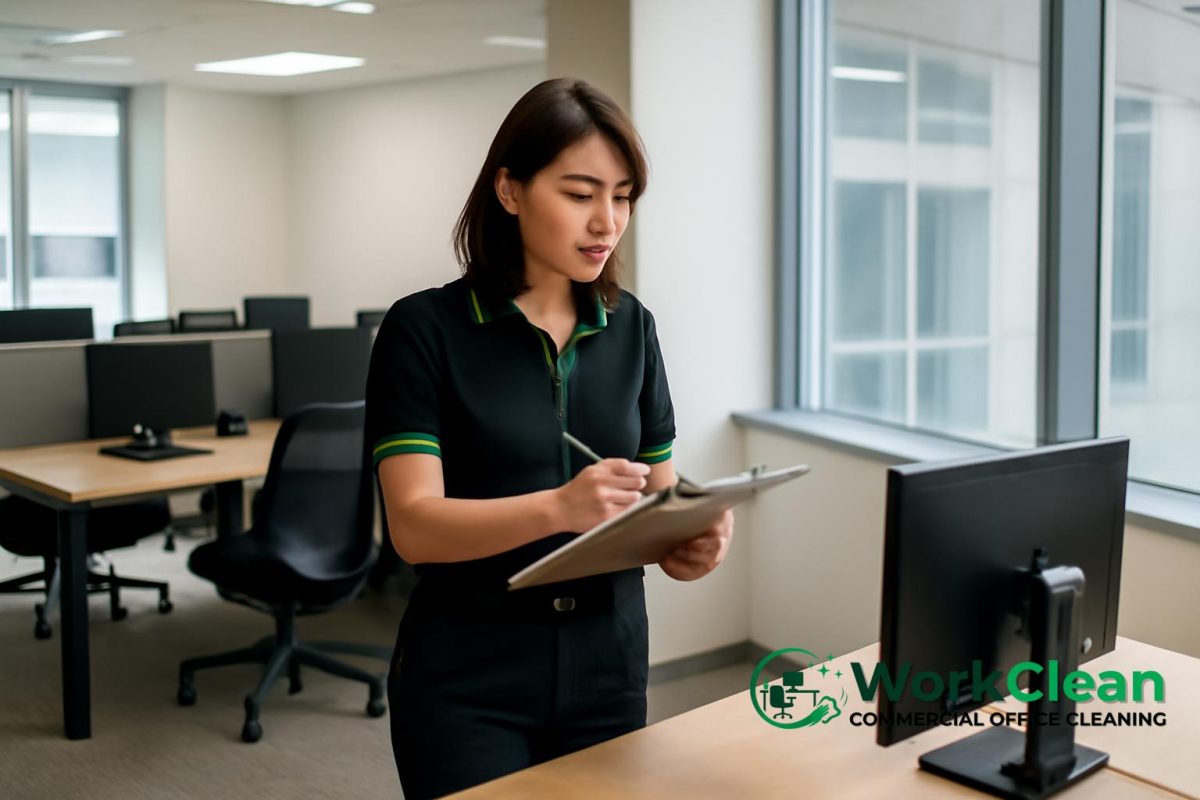
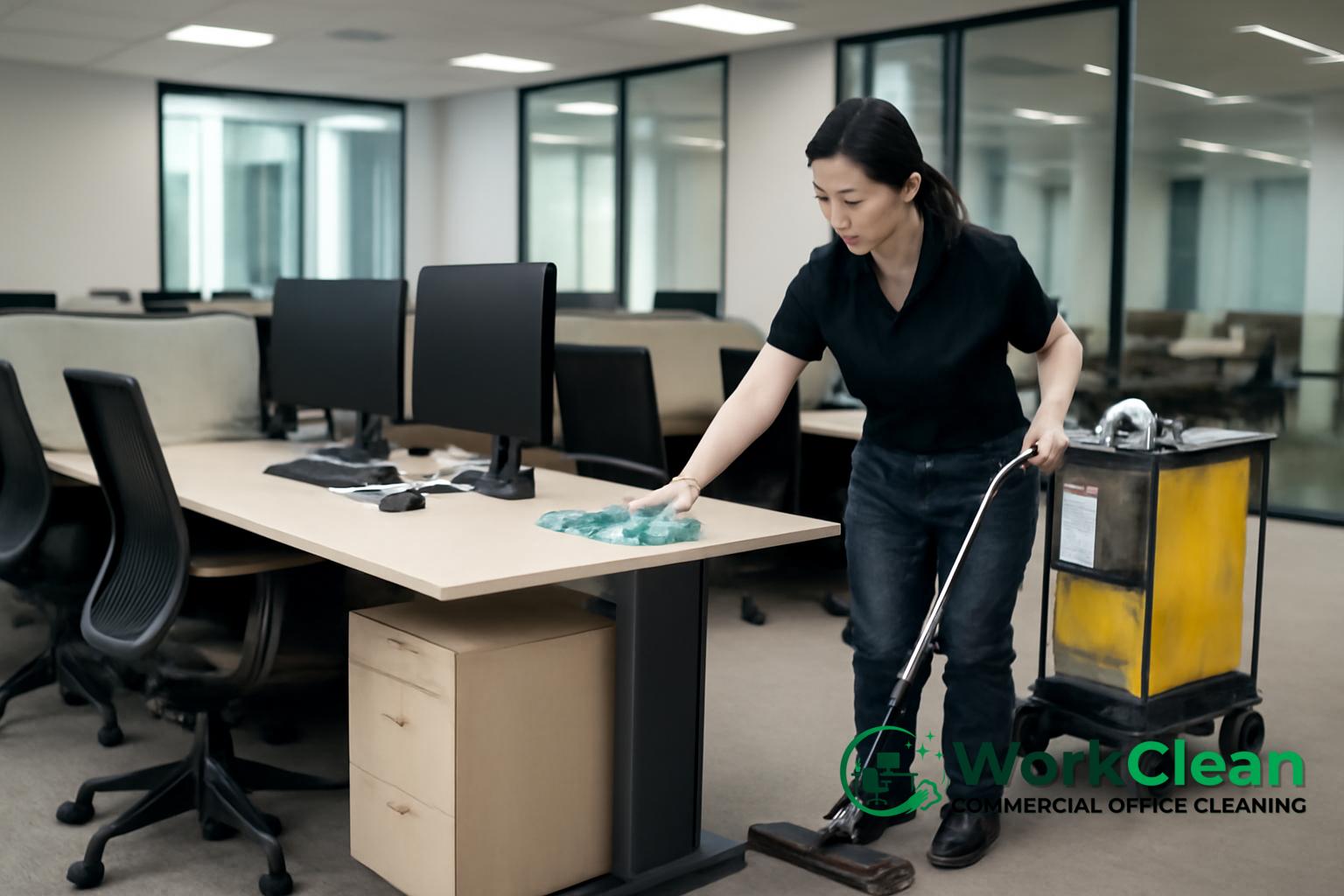
Desks are among the most-used surfaces in any office, so they should be wiped during every visit, especially if they are shared or used by multiple employees across the week. Cleaning usually includes removing dust, wiping tabletops, clearing light marks and paying attention to areas around monitors, keyboards and desk edges, while respecting the company’s setup and any items that should not be disturbed.
In shared workplaces, regular workstation upkeep helps maintain a professional environment and makes it easier for employees to settle in each day. For offices that operate hot-desking or flexible seating, this task becomes even more important because surfaces are used more intensively and need a consistent standard.
Reception areas and meeting rooms shape the first impression
Reception areas are often the first point of contact for clients, delivery teams and interview candidates. Every visit should include visible dust removal, wiping of tables and counters, tidying of seating areas and ensuring the space looks orderly. If glass surfaces, decorative features or reception counters are left untouched, the whole office can appear neglected even if the rest of the premises is clean.
Meeting rooms should also be part of every routine clean because they are used for presentations, discussions and client-facing work. Chairs, tables, conference room surfaces, light switches and other common touchpoints should be cleaned regularly so the room is ready for use without last-minute tidying by staff.
Pantries and toilets need careful daily attention
Pantries are high-risk areas for crumbs, spills and odours, so they should be cleaned at every visit. This normally includes wiping food preparation surfaces, emptying rubbish bins, cleaning sinks, checking microwave exteriors, removing visible spills and keeping the area generally hygienic. A tidy pantry supports better workplace hygiene and helps prevent pests from becoming a problem.
Toilets require especially close attention because they affect both comfort and perception of cleanliness. Every visit should include replenishing essentials where applicable, cleaning basins, mirrors, taps, toilet bowls, cubicle surfaces and floors, and checking for odours or visible residue. In Singapore offices, where humidity and heavy use can make odours build up quickly, skipping toilet cleaning is one of the fastest ways to reduce employee satisfaction and visitor confidence.
Shared touchpoints should be cleaned on every visit
Some of the most important tasks are the ones people touch repeatedly throughout the day. Light switches, door handles, lift lobby touchpoints within the office, pantry handles, shared tables and commonly used counters should be part of the standard routine. These surfaces may not always look dirty, but they are often the most frequently handled areas in the office.
Cleaning these touchpoints consistently supports a healthier workplace and reduces the chance that dirt and grime spread from one area to another. For commercial cleaning in Singapore, this is especially relevant in premises with visitors, rotating teams or shared facilities where traffic is high and usage patterns change throughout the day.
Floors should be swept, vacuumed and mopped properly
General floor upkeep is a core part of every visit because floors quickly show dust, litter and stains. Depending on the surface type, cleaning may involve vacuuming carpets, sweeping hard floors and mopping with the right solution so that dirt is removed rather than spread around. Entry points and pantry zones usually need extra attention due to tracked-in dirt and spills.
It is also important that floor cleaning is matched to the material. Carpets, vinyl, laminate, tile and polished surfaces all need different methods and equipment. Using the wrong cleaner or too much moisture can damage finishes, leave slippery patches or create a poor result that looks clean at first glance but does not hold up during the day.
Dusting high and visible surfaces helps the office stay presentable
While daily cleaning focuses on the visible and heavily used areas, each visit should still include basic dusting of reachable surfaces such as shelves, ledges, skirting areas, side tables and office furniture. Dust builds up quickly in air-conditioned environments, especially around equipment, corners and surfaces that are not handled every day.
Visible dust can affect both comfort and image. Staff may notice it less at first, but clients and visitors often see it immediately. For offices that want to maintain a tidy, professional look between deeper cleans, regular dusting is one of the simplest ways to improve the overall standard.
Office chairs, sofas and upholstery should not be ignored
Office chairs and sofas collect dust, crumbs and surface dirt over time, particularly in reception areas, collaboration zones and shared breakout spaces. Every visit may not require full upholstery cleaning, but it should include a quick inspection and light cleaning of visible marks, crumbs and debris. This keeps furniture looking cared for and prevents dirt from settling deeper into the fabric.
For more thorough maintenance, upholstery cleaning, office chair cleaning and office sofa cleaning can be arranged on a less frequent schedule. That balance is often practical for Singapore offices: routine visits handle the everyday upkeep, while deeper fabric care is planned separately to suit usage levels and the condition of the furniture.
How to balance DIY tasks with professional office cleaning
Some office tasks can be managed by staff, such as wiping up an immediate spill, keeping personal desks tidy or clearing food waste after lunch. However, day-to-day housekeeping by employees should not replace a proper cleaning scope, especially in offices with multiple users or client-facing spaces. Staff time is usually better spent on work, not routine maintenance of toilets, floors and shared areas.
Professional office cleaning services bring a more structured approach with the right tools, cleaning agents and processes for commercial premises. A cleaning provider can help set the frequency of visits, identify priority zones and adjust the scope for part time cleaning services, regular office cleaning services or other arrangements that suit the office layout and budget.
Common mistakes when setting the cleaning scope
One common mistake is leaving important tasks vague. If a provider is only told to “clean the office”, it may not be clear whether that includes toilets, pantry sinks, meeting room tables, bins or shared touchpoints. A better approach is to list the areas and the expected tasks for each visit, then review them regularly as the office changes.
Another mistake is focusing only on visible tidiness and forgetting hygiene-heavy areas such as toilets, pantry surfaces and door handles. Some offices also underestimate how quickly floor cleaning and upholstery care need to be refreshed in busy workplaces. Choosing a suitable office cleaning company means looking for a provider that can explain what is included, what is excluded and how the service frequency will be maintained in practice.
What affects the cost and scope of regular cleaning
The cost of office cleaning in Singapore is usually shaped by the size of the premises, the number of rooms and toilets, the amount of shared space, the frequency of visits and the condition of the office. A compact startup office with limited traffic will usually need a different scope from a larger commercial space with a reception, meeting rooms, pantry areas and multiple washrooms.
Cleaning equipment, specialised tasks and the need for customised schedules can also affect pricing. For example, an office that needs regular upholstery care, chair cleaning or extra attention to pantry and toilet hygiene may require a broader scope than one that only needs basic upkeep. The clearest quotations are usually those that explain the visit-by-visit tasks, the frequency and any optional add-ons.
If you would like a transparent quotation and a suitable office or commercial cleaning scope, frequency and schedule for your workplace, WhatsApp WorkClean Commercial Office Cleaning Singapore here: message us on WhatsApp.
Conclusion
Every office cleaning visit should cover the essentials that keep a workplace hygienic, orderly and ready for use. In practice, that means maintaining desks and workstations, cleaning reception and meeting areas, paying close attention to pantries and toilets, wiping shared touchpoints, caring for floors and looking after furniture surfaces. When these tasks are defined clearly, office managers can choose a cleaning arrangement that supports daily operations without wasting time or missing key areas.
Choose WorkClean Commercial Office Cleaning Singapore
WorkClean Commercial Office Cleaning Singapore supports workplaces across Singapore with dependable and flexible office and commercial cleaning services. Our office cleaning arrangements include regular office cleaning, part-time office cleaning, part-time cleaning services and customised schedules for clients who require support with office upkeep without managing an in-house cleaning team. As an office cleaning company, we focus on key workplace areas such as workstations, meeting rooms, reception areas, pantries, toilets and common spaces. Whether you need a part-time office cleaner or a part-time cleaning company, we can recommend a suitable arrangement based on your premises, preferred timing and cleaning scope.
For broader commercial requirements, we also provide commercial cleaning services for different types of commercial premises. As a commercial cleaning company, we offer commercial office cleaning services together with general upkeep, upholstery cleaning, office chair cleaning and sofa cleaning where suitable.
Clients can read our blog for workplace cleaning insights, review our completed projects or check our pricing for available cleaning options. Contact WorkClean Commercial Office Cleaning Singapore on WhatsApp at +65 8241 0032 for assistance or to request a quotation.
Frequently Asked Questions
What should be cleaned during every office cleaning visit?
Core tasks usually include workstations, reception areas, meeting rooms, pantries, toilets, shared touchpoints, bins and floors. The exact scope should be adjusted to the office layout, headcount and traffic levels.
How often should upholstery, office chairs and sofas be cleaned?
Light upkeep can be done during routine visits, while deeper upholstery cleaning is usually scheduled less frequently. The right interval depends on usage, fabric type and how quickly dust or stains build up in the space.
Is part time office cleaning suitable for Singapore offices?
Yes, part time office cleaning can suit many offices, especially smaller premises or workplaces that only need routine upkeep on certain days. The main point is to match the cleaning frequency and scope to actual usage, rather than choosing a fixed schedule that does not fit the office.